Public Trust in News 2026: Why Audiences Are Turning Away
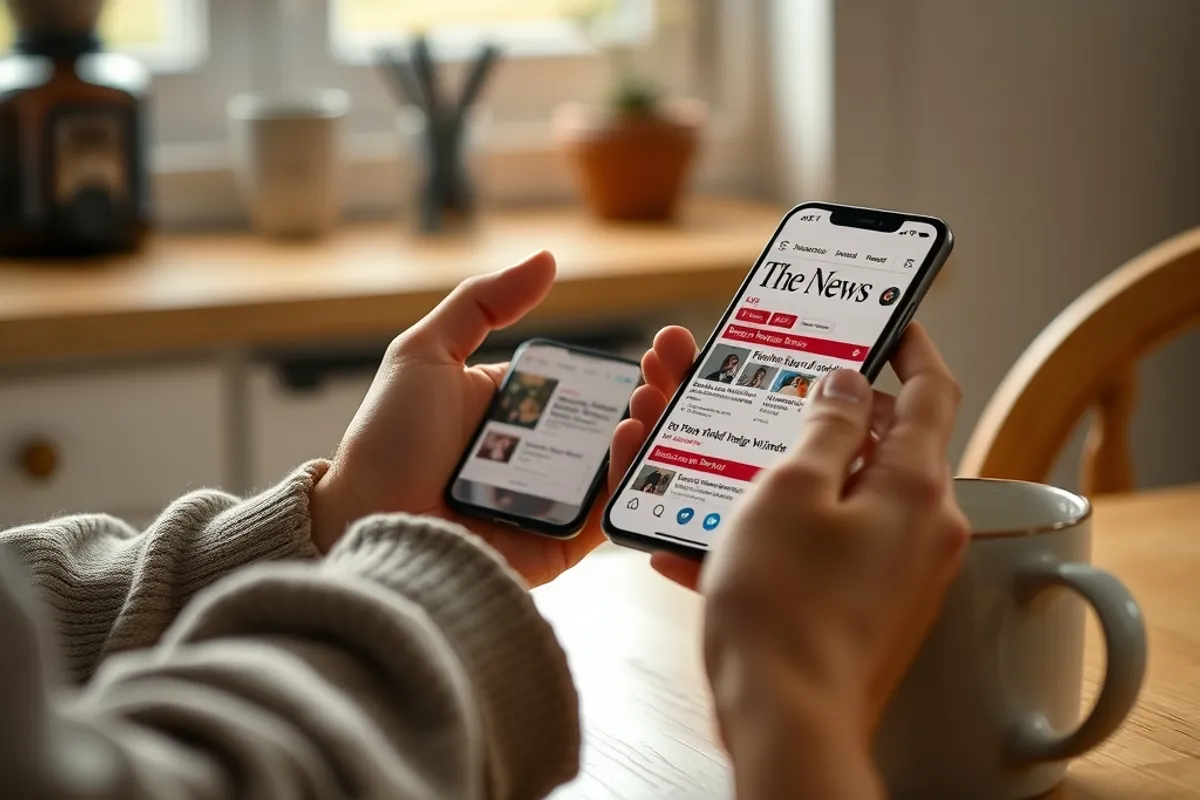
Trust in the news is often discussed as a political problem, but the audiences we spoke to described something simpler: exhaustion. They are not convinced that everything is fake. They are tired of having to check whether a headline is worth their time. That shift has consequences for publishers, platforms and anyone trying to understand public opinion in 2026.
The trust gap in numbers
Surveys across several countries show a similar pattern: a large share of people say they trust the news less than they did five years ago, while a smaller but significant group say they avoid news altogether. The decline is not evenly spread. Local outlets, specialist publications and public service broadcasters generally hold up better than national tabloids and social feeds.
Those numbers are easy to misread. "Trust" can mean believing a story, believing a brand or believing that the news system is fair. A reader may trust a specific reporter and distrust the industry. Any publisher that treats the headline trust figure as a single verdict will misdiagnose the problem.

What audiences tell us
In conversations with readers, the complaints were consistent. Headlines that promise more than the article delivers. Opinion presented as reporting. Endless updates that repeat the same information with a new timestamp. Political coverage that treats every disagreement as a crisis and every crisis as a game.
The strongest frustration was not bias in the abstract. It was wasted attention. People said they would happily read a serious story if they could tell within a few seconds that it was serious. The formats that earn repeat visits are the ones that respect the reader's time before asking for it.

The algorithm problem
Recommendation systems reward engagement, and outrage engages. That does not make every algorithmic feed a misinformation machine, but it does shape which stories get produced and how they are framed. A publisher competing for clicks learns to write for the scroll, even when the subject deserves patience.
Audiences sense this. When every story arrives with the same emotional volume, people stop using tone to judge importance. They either click everything or click nothing. The result is a news diet that is either compulsive or abandoned, with very little deliberate reading in between.
Local news as the exception
Local outlets have an advantage that national publishers cannot manufacture: proximity. A story about a council budget or a closed road can be checked with people who were in the room. Readers can see whether the reporting matches their experience, and that visible accountability builds trust faster than any campaign.
Local news is also more likely to be useful. A reader may disagree with a paper's politics and still need to know when the bins are collected. Utility creates a relationship that survives disagreement, and that relationship is the foundation on which harder reporting can stand.
Transparency that works
Publishers often respond to distrust with transparency theatre: a long ethics page, a vague commitment to accuracy and no way to see either in practice. What works is narrower and more concrete. Show the source. Label opinion clearly. Explain what you do not know. Correct errors at the top of the story, not in a footnote.
The readers we spoke to did not expect perfection. They expected accountability. A newsroom that says "we got this wrong and here is what changed" earns more credibility than one that never admits a mistake. That is not a communications strategy. It is a habit, and it has to be practiced on ordinary days, not only during crises.
"Trust is not a mood. It is the accumulated memory of being right, being clear and admitting when you were wrong."
The bottom line
Audiences are not abandoning news because they no longer care. They are leaving formats that exhaust them and brands that do not reward attention. The publishers holding on are the ones that are useful, specific and willing to be checked.
For readers, the practical response is to build a small, deliberate news diet: a few sources you have tested over time, a habit of reading past the headline, and a willingness to pay for reporting you value. Trust is not restored by a single outlet. It is rebuilt by many small acts of reliability.
For related coverage, read our analysis of The Cost-of-Living Mood 2026: What Surveys Really Show and our report on AI and the Newsroom 2026: Who Reports the Story Now?.
Further reading from independent sources: Reuters and Associated Press.